

How to choose the right moving company in Austin before you regret it
|
Hiring movers is one of those things that feels simple until it isn’t. You search for movers in Austin, get a few quotes, pick the cheapest one, and hope for the best. Sometimes it works out. Other times, your stuff shows up damaged, the price doubles on moving day, or the crew doesn’t show up at all.
The Austin moving market is competitive, with everything from one-person operations running out of a pickup truck to national chains with call centers in other states. Most companies are legitimate and do good work. But some aren’t, and the difference between a great move and a terrible one often comes down to asking the right questions before you hand over your belongings.
Here’s how to evaluate and choose a moving company in Austin that you can actually trust.
Check their licensing and insurance first
This is the single most important step, and most people skip it entirely. In Texas, any moving company operating intrastate must be registered with the Texas Department of Motor Vehicles (TxDMV) and hold a Motor Transportation Registration (MTR) number. For interstate moves, they need a USDOT number from the Federal Motor Carrier Safety Administration.
Ask any mover you’re considering for their MTR number and their USDOT number. Then verify them. You can check a company’s TxDMV registration on the TxDMV Truck Stop lookup and their USDOT number on the FMCSA website. If they can’t provide these numbers, or if the numbers don’t check out, walk away. An unlicensed mover offers zero legal protection if something goes wrong.
You also want to confirm they carry liability insurance and workers’ compensation coverage. If an uninsured mover gets injured in your home, you could be liable. Legitimate companies will provide proof of insurance without hesitation.
For reference, Austin Moving Company holds USDOT #3051481. You can verify that number on the FMCSA site yourself. That’s the kind of transparency you should expect from any mover you consider.
Know your rights under Texas moving law
Most people don’t realize Texas has strong consumer protections for household moves. Every licensed mover must hand you a copy of the “Your Rights and Responsibilities When You Move in Texas” document before loading a single box. If they skip this step, that’s a red flag.
Here are the protections you should know about:
- Written proposals are required. Texas law requires movers to give you a written proposal stating the maximum you could pay. This proposal must be either “binding” (a fixed price) or “not-to-exceed” (a price cap that can come down but not go up). If a mover hands you only a verbal estimate, they’re breaking the rules.
- You have 90 days to file a damage claim. After delivery, inspect everything. If something is damaged or missing, file a written claim with the mover within 90 days. This is a hard deadline. Once it passes, your claim is dead.
- The mover has 90 days to respond. After receiving your claim, the mover must pay, deny, or make a settlement offer in writing within 90 days.
- Free mediation through TxDMV. If you can’t resolve a dispute, TxDMV provides mediation at no cost.
These rules exist to protect you. But they only protect you if the mover is licensed. That’s why step one matters so much.
Understand the three types of moving estimates
Not all moving quotes work the same way. Before comparing prices, understand what type of estimate you’re getting.
Binding estimate. A fixed price for a fixed scope. The mover can’t charge more than the quoted amount, as long as you don’t add items or services on moving day. This is the safest option for long-distance or large moves.
Not-to-exceed estimate. This sets a price ceiling. The final cost can come down if the move takes less time or weighs less than expected, but it can’t go above the quoted amount. Texas law allows this format, and it gives you cost protection with some downside flexibility.
Non-binding estimate. An educated guess. The final price can go up or down depending on actual weight, time, and services. For local hourly moves, this is common and manageable. For long-distance moves, it carries real risk.
When comparing quotes, ask each mover: is this binding, not-to-exceed, or non-binding? That single question changes how much the bottom-line number actually means.
Read reviews, but read them right
Online reviews are useful, but you have to know how to read them. Here’s what to look for:
- Volume matters. A company with 200+ reviews on Google is more reliable than one with 15. A handful of reviews is easy to fake. Hundreds are not.
- Read the recent reviews, not just the overall rating. A company that had great reviews three years ago but mediocre reviews in the last six months might be going through staffing or management issues.
- Look for specific details. Reviews that mention crew members by name, describe the type of move, and explain what went well or didn’t are far more trustworthy than generic five-star reviews that say “great service.”
- Check multiple platforms. Google reviews are the most important, but also look at Yelp, Facebook, and the BBB. Consistency across platforms is a good sign.
- Don’t dismiss a company over one or two negative reviews. Every mover gets the occasional complaint. What matters is how they responded. Did they try to make it right, or did they ignore it?
Austin Moving Company has 940+ verified reviews with a 4.9-star average across Google, Yelp, and Facebook. That kind of consistency across platforms over time is hard to manufacture.
Get at least three quotes and compare them carefully
Always get quotes from at least three moving companies before making a decision. But don’t just compare the bottom-line number. Compare what’s included.
Some movers advertise a low hourly rate but then tack on charges for fuel, mileage, stairs, long carries, packing materials, and truck fees. By the time you add everything up, the “cheapest” quote can end up being the most expensive. Other companies offer an all-inclusive hourly rate that covers the crew, the truck, all equipment, and fuel. Apples-to-apples comparisons are the only kind that matter.
When you get a quote, ask specifically: what’s included in this price? What could cause the price to go up on moving day? What’s not included? A company that gives you clear, direct answers is one worth considering.
You can request a free quote from Austin Moving Company online or by phone. The quote covers crew, truck, equipment, and fuel with no hidden fees.
What Austin moves actually cost in 2026
Pricing varies by home size, distance, crew size, and season. Here are the ranges you should expect from licensed Austin movers in 2026:
- Studio or 1-bedroom: 2 movers, 2 to 3 hours, roughly $400 to $600
- 2-bedroom home: 2 to 3 movers, 3 to 5 hours, roughly $600 to $1,000
- 3-bedroom home: 3 to 4 movers, 5 to 8 hours, roughly $1,100 to $1,700
- 4-bedroom home or larger: 4+ movers, 8 to 10 hours, $1,700 to $2,500+
Most professional Austin local movers charge between $120 and $200 per hour for a two-to-three person crew with a truck. That range covers the crew, the vehicle, basic equipment, and fuel.
Long-distance moves from Austin are priced differently. These are usually based on shipment weight and mileage, not hourly rates. A 3-bedroom move from Austin to Dallas might run $2,500 to $5,000. Austin to Los Angeles could hit $7,000 to $14,000, depending on weight and timing.
For a detailed breakdown, check the Austin Moving Company pricing page.
Understand your liability coverage options
If something gets damaged during a move, what happens next depends on the type of liability coverage in your contract. Most people don’t think about this until it’s too late.
Basic carrier liability (released value). This is the default, and it costs nothing extra. But it only covers $0.60 per pound per article. If a mover drops your 50-pound flat-screen TV, you get $30. That’s the legal minimum.
Full-value protection. This requires the mover to repair, replace, or reimburse you for the current value of any damaged or lost item. It costs more, but for moves with high-value furniture, electronics, or heirlooms, it’s worth asking about.
Ask every mover what coverage is included and what additional options they offer. Get it in writing before moving day.
Watch for these red flags
The moving industry has its share of bad actors. Here are the warning signs that should make you pause.
The quote is dramatically lower than everyone else’s
If one company quotes you $400 and three others quote $800 to $1,000 for the same move, something is off. Lowball estimates are the most common tactic used by problematic movers. They get you to commit with a low number, then inflate the price on moving day when your furniture is already on their truck and you’re under pressure.
They won’t do an estimate based on your actual move
A legitimate moving company will ask detailed questions about your home size, inventory, stairs, distance, and special items before quoting you. If someone gives you a price without asking any questions, they’re guessing, and that guess will change on moving day.
They want a large deposit upfront
Most reputable local movers don’t require deposits for standard moves. If a company asks for a large cash deposit before they’ve moved a single box, be cautious. Payment at the end of the move, once you’ve confirmed everything arrived safely, is the standard in Austin.
They don’t have a physical address or branded trucks
Fly-by-night movers operate out of rented trucks with no branding and no physical office. Legitimate companies have branded vehicles, a real address, and an established presence. Check their website, their Google Business Profile, and look for photos of their actual trucks and team.
They pressure you to sign immediately
High-pressure sales tactics are a red flag in any industry. A good moving company will give you a quote and let you take time to compare. If someone is pushing you to commit on the spot with a “today only” price, you’re being sold, not served.
Time your Austin move to save money
When you move matters almost as much as who moves you. Austin has clear seasonal patterns that affect price and availability.
Peak season runs May through September. Demand spikes in summer, and prices follow. August is the worst month. That’s when UT students flood the market. Tens of thousands of leases turn over in the same two-week window, and every moving company in town is booked solid.
Mid-week moves cost less. Tuesday and Wednesday are typically the cheapest days to move. Friday, Saturday, and end-of-month dates carry premiums because demand is highest.
Book 6 to 8 weeks ahead during peak season. If you’re moving between June and August, waiting until the last minute means fewer options and higher prices. During the off-season, 2 to 3 weeks of lead time is usually enough.
Winter moves (October through February) are 20% to 30% cheaper. If you have flexibility on timing, a January move gets you better rates, more crew availability, and cooler weather for the crew.
Austin neighborhoods with tricky logistics
If you’re moving in or out of certain Austin neighborhoods, give your movers a heads-up. Access issues add time, and time costs money.
- Downtown and South Congress. Narrow streets, limited parking, and strict building move-in windows. Many high-rises require elevator reservations and loading dock scheduling days in advance.
- East Austin. Older homes with narrow doorways, steep porch steps, and limited truck access on side streets.
- West Austin and the Hill Country. Steep driveways, gravel roads, and long carries from the truck to the front door. Some homes in Westlake and Bee Cave require shuttle trucks because full-size rigs can’t navigate the driveways.
- Pflugerville and Round Rock. Newer construction with wider streets and easier access. These moves tend to go faster, which means lower hourly costs.
Tell your mover about stairs, elevators, narrow hallways, long driveways, and parking restrictions during the estimate. Surprises on moving day almost always increase the bill.
Questions to ask before you hire
Here’s a quick list of questions to ask any Austin moving company before you book:
- What is your MTR number and USDOT number?
- Do you carry liability insurance and workers’ compensation?
- Is this estimate binding, not-to-exceed, or non-binding?
- What’s included in your hourly rate or flat rate?
- What could cause my price to change on moving day?
- How many movers will be on my crew?
- Are your movers W-2 employees or day laborers?
- What liability coverage is included, and what are my upgrade options?
- Do you provide furniture protection (blankets, plastic wrap, floor runners)?
- What’s your policy if something gets damaged?
- How far in advance should I book?
Tipping your Austin movers
Tipping is not required, but most people do tip if the crew does a good job. Here are the standard ranges:
- Standard local move: $20 to $40 per mover
- Long, difficult move (stairs, heavy items, 8+ hours): $40 to $80 per mover
- Cash is preferred. Hand it directly to each crew member at the end of the move, not to a team lead to split.
Beyond cash, cold water, sports drinks, and snacks during the move go a long way. Austin summer moves hit 100+ degrees. A cooler stocked with water is the most practical thing you can do for your crew.
What a great moving experience actually looks like
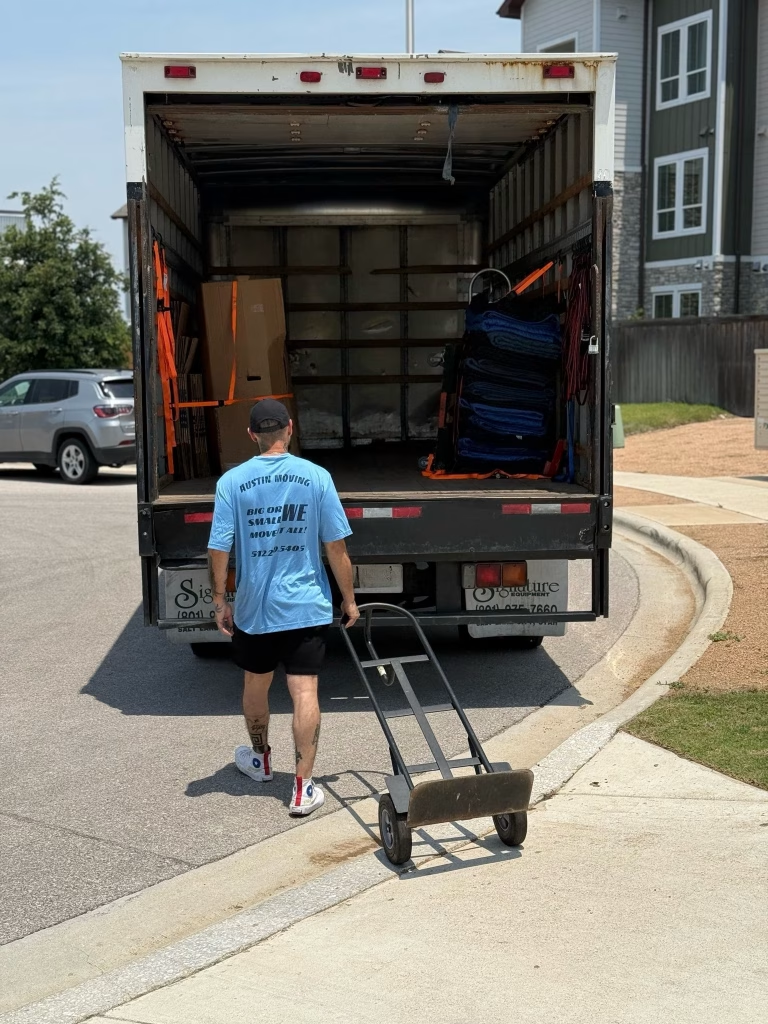
When you hire the right company, moving day should feel surprisingly smooth. The crew shows up on time, introduces themselves, and does a walkthrough with you. They protect your floors and doorframes. They wrap every piece of furniture. They load the truck methodically. At your new place, they put everything where you ask. Before they leave, they check with you to make sure everything looks good.
You pay a fair price for a professional service, and you don’t have to worry about your couch getting scratched, your walls getting dinged, or your price getting doubled. That’s what hiring the right movers in Austin should actually mean, not the flashiest website or the most ads, but the crew that shows up and does the job right.
Get a free moving estimate from Austin Moving Company
Austin Moving Company is a family-owned Austin moving company with 940+ reviews and a 4.9-star rating. We handle local moves,long-distance relocations,apartment moves, and commercial moves across the Austin metro, including Pflugerville,South Austin, Round Rock, Cedar Park, and Georgetown.
Every move includes licensed, insured crews, full furniture protection, and upfront pricing with no hidden fees. USDOT #3051481. Request your free moving quote or call to book your move today.
Explore More News & Case Studies
Moving To Austin: A Local’s Guide To The Best Neighborhoods
Austin is one of the fastest-growing cities in the country, and for good reason. No state…Moving from Austin to San Diego: Everything You Need to Know
It’s a route that thousands of people make every year. Some are chasing the ocean. Others…The Complete Austin Moving Checklist: Your Week-by-Week Guide
Moving in Austin comes with its own set of challenges. Between the summer heat, the I-35…


Ready to Book Your Move?
No pressure. No hidden fees. Free estimates.